Strong Markets, High Expectations: What Investors Should Watch in the Second Half of 2026
The first half of 2026 delivered strong results for investors, despite no shortage of reasons for concern.
The S&P 500 gained 14.6% during the first quarter, making it the index’s 12th-best quarter since 1960. That performance came amid war in Iran, geopolitical uncertainty, higher oil prices, and widespread market anxiety. Yet strong fundamentals ultimately prevailed.
For long-term investors, it was another reminder that markets can advance even when the headlines suggest they should not.
History also provides some encouragement for the remainder of the year. Looking back to 1960, exceptionally strong quarters have frequently been followed by positive performance over the next two quarters. Nothing in the markets is guaranteed, but when that historical pattern is combined with the underlying technical strength we discussed last month, the conditions appear more supportive of a stronger second half than a weaker one.
That does not mean the market is without vulnerabilities.
Several high-flying semiconductor stocks have recently declined by roughly 30% after extraordinary gains over the previous 15 months. Importantly, however, investors are not necessarily abandoning equities. Capital has been rotating into sectors such as healthcare and financials, helping support the broader market. That type of rotation can be a healthy sign.
Three factors are likely to shape the market’s direction from here: oil prices, inflation, and corporate earnings.
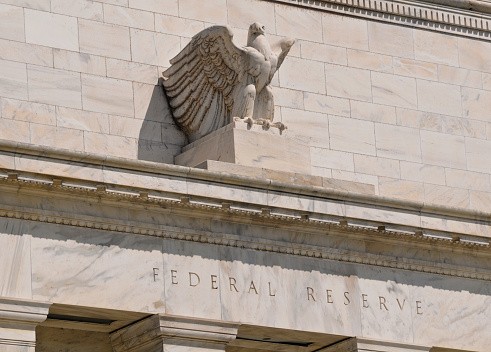
The Federal Reserve appears committed to remaining data-dependent. It is unlikely to cut rates reflexively, but it also may not raise them unless inflationary pressures demand it. Oil prices will be an important part of that calculation, particularly if renewed hostilities push energy costs higher.
Corporate earnings remain the market’s most powerful fundamental support. Current forecasts call for earnings to increase 31.1% over the next 12 months—about three times the normal rate. Unlike similar surges following the recessions of 2009 and 2021–2022, today’s forecast reflects a mid-cycle acceleration from an already strong base, driven in large part by the artificial intelligence investment cycle.
That is encouraging, but it also creates risk. Expectations are ambitious, and valuations are elevated. The market is not necessarily as overvalued as it was in 1999, but it is undeniably expensive. High valuations combined with lofty earnings expectations can produce sharp volatility if results disappoint.
August has often brought temporary market downturns as trading activity and liquidity decline. We may see another bout of volatility this summer. Whether it proves to be a brief head fake or the beginning of a more lasting trend will depend largely on oil prices, inflation, and whether companies can deliver the earnings growth investors now expect.
Those will be the key indicators to watch as the second half of 2026 unfolds.